



×
 Time:2024-12-30
In December, NHU has achieved another important milestone in innovation and intellectual property management by successfully obtaining the ISO 56005 Level 4 certification. This accomplishment makes NHU the third company in Zhejiang Province and the first in Shaoxing City to reach this certification level. It not only affirms NHU's continuous dedication but also marks a significant advancement in the company's innovation and intellectual property management.
ISO 56005 is the first international intellectual property management standard developed and promoted by China. The highest evaluation level a domestic enterprise can achieve under this standard is Level 4. The main objective of ISO 56005 is to integrate intellectual property management into innovation activities, encouraging a closer alignment between innovation management and intellectual property management, ultimately enhancing both the effectiveness of innovation management and the capacity for intellectual property creation within enterprises. In May of this year, NHU took the lead in adopting the grading evaluation for the international standard ISO 56005, "Innovation Management – Guide to Intellectual Property Management". Through thorough implementation of this standard, we have successfully innovated and optimized our intellectual property management, integrating IP management into every aspect of the innovation process. Additionally, we have clarified the direction, strategy, and implementation pathway for managing intellectual property rights within innovation, with the goal of significantly improving the efficiency, quality, and overall results of our innovation activities.
As an innovative enterprise, NHU has always considered intellectual property protection a core element of its development strategy. We have seamlessly integrated intellectual property management with business operations and technological innovation to ensure this strategy is embedded across research and development, production, sales, and other key areas, resulting in a unique and efficient intellectual property management model. In addition to establishing a robust intellectual property management system and process, we have prioritized raising employees' awareness of intellectual property, fostering creative thinking, and promoting the generation of intellectual property. Through continuous investment in R&D, NHU has made significant breakthroughs in various technological fields, successfully converting these innovations into patents, trademarks, and other intellectual property assets. To date, NHU has filed over 1,000 patent applications, holds more than 800 granted patents, owns over 600 valid trademarks, and earned numerous prestigious awards, including two China Patent Gold Awards, one China Patent Silver Award, three China Patent Excellence Awards, and two Second Prizes in the National Award for Technological Inventions, among others.
Looking ahead, NHU will continue to strengthen its innovation and intellectual property management strategy. On one hand, we will increase our investment in research and development, focusing on cutting-edge technologies, and consistently introduce new products and technologies with independent intellectual property rights to boost our core competitiveness. On the other hand, we will further enhance our intellectual property management system, improving the creation, application, protection, and management of intellectual property rights to ensure efficient transformation and maximization of their value. Additionally, NHU will actively engage in the development of industry standards and international cooperation on intellectual property protection, contributing to the healthy growth of the industry and the stability of the global supply chain.
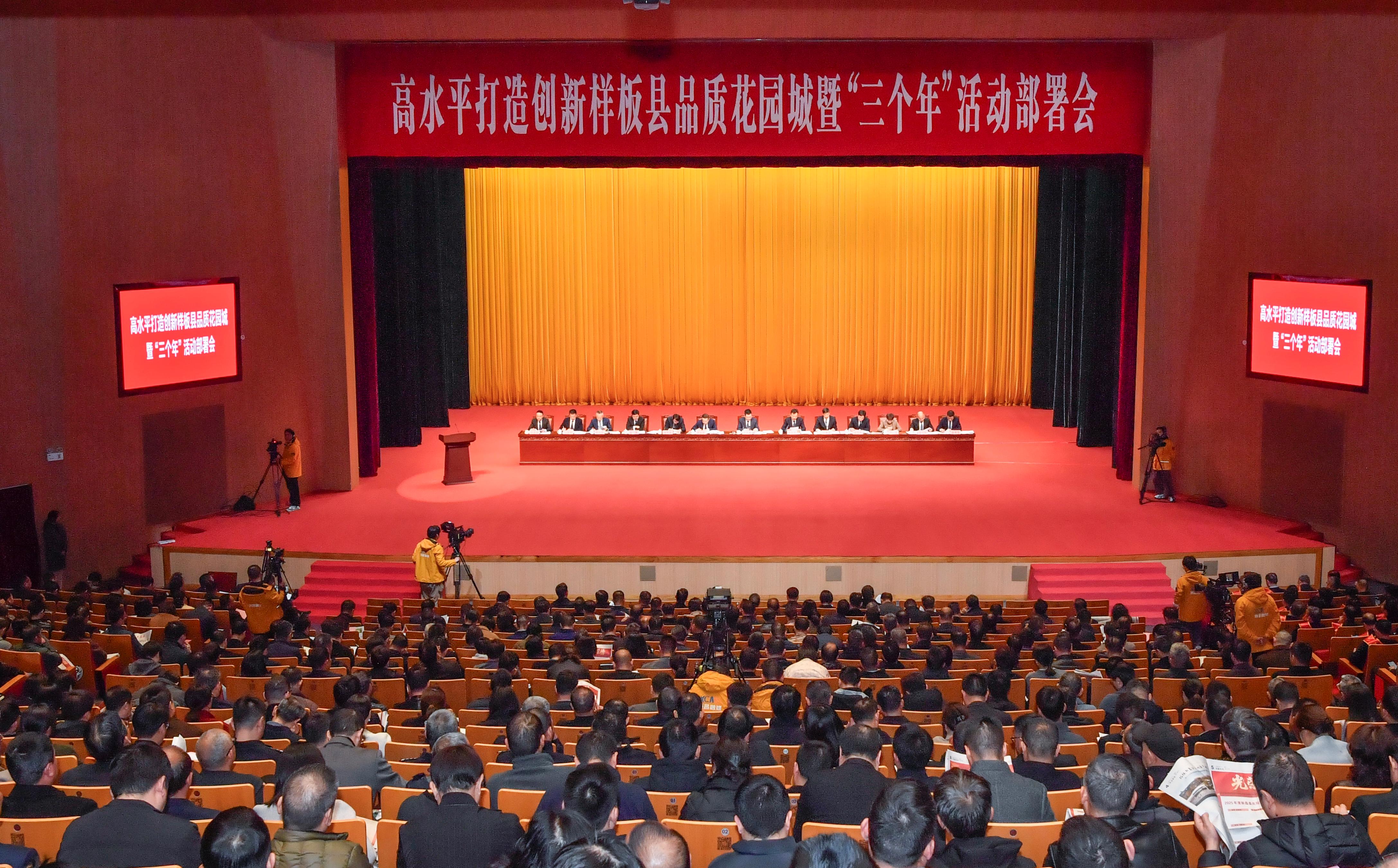
As a new year unfolds, NHU has begun on a high note, receiving a series of honors that signal a strong start and lay a solid foundation for the year ahead.
View details

NHU’s project, “Development and Industrialization of Integrated Manufacturing Technologies for High-Quality Solid Methionine” was awarded the First Prize of the Science and Technology Progress Award in recognition of its significant technological breakthroughs and industrial value.
View details
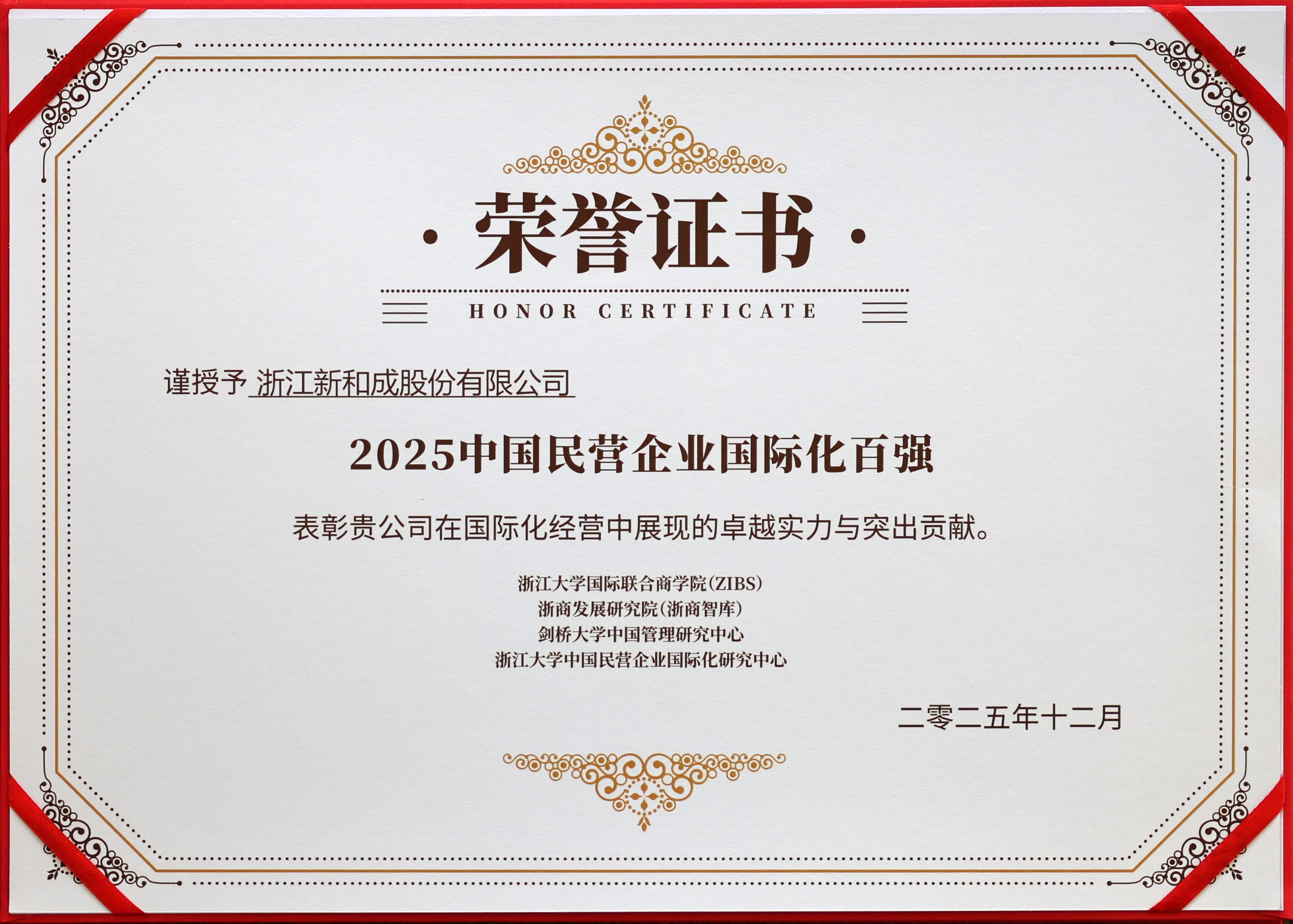
On December 12, the forum “Resilience, Symbiosis, Leadership – Release of the Top 100 Chinese Multinational Private Enterprises and the Zhejiang Business Think Tank Dialogue on the 15th Five-Year Plan” was successfully held in Hangzhou. At the event, the Center For Chinese Multinationals (CCM) of Zhejiang University Business School (ZIBS) released the Top 100 Chinese Multinational Private Enterprises 2025 list. NHU was honored to be included, in recognition of its forward-looking global strategy, robust and continuously innovative R&D system, and growing international influence.
View details